The second wave of the pandemic unfortunately demonstrated the huge challenges of Indian healthcare infrastructure across the board – rural and urban, private and public, rich and the poor. It became evident that there is an urgent need to build new solutions and platforms not just to cope with new healthcare demands, but also to provide continuous and sustainable solutions even at the last mile.
At Bahaar Foundation, we are reimagining last-mile healthcare delivery through our Community Health Entrepreneur (CHE) model— A sustainable and scalable solution that tackles challenges related to health access, livelihoods and gender equity.
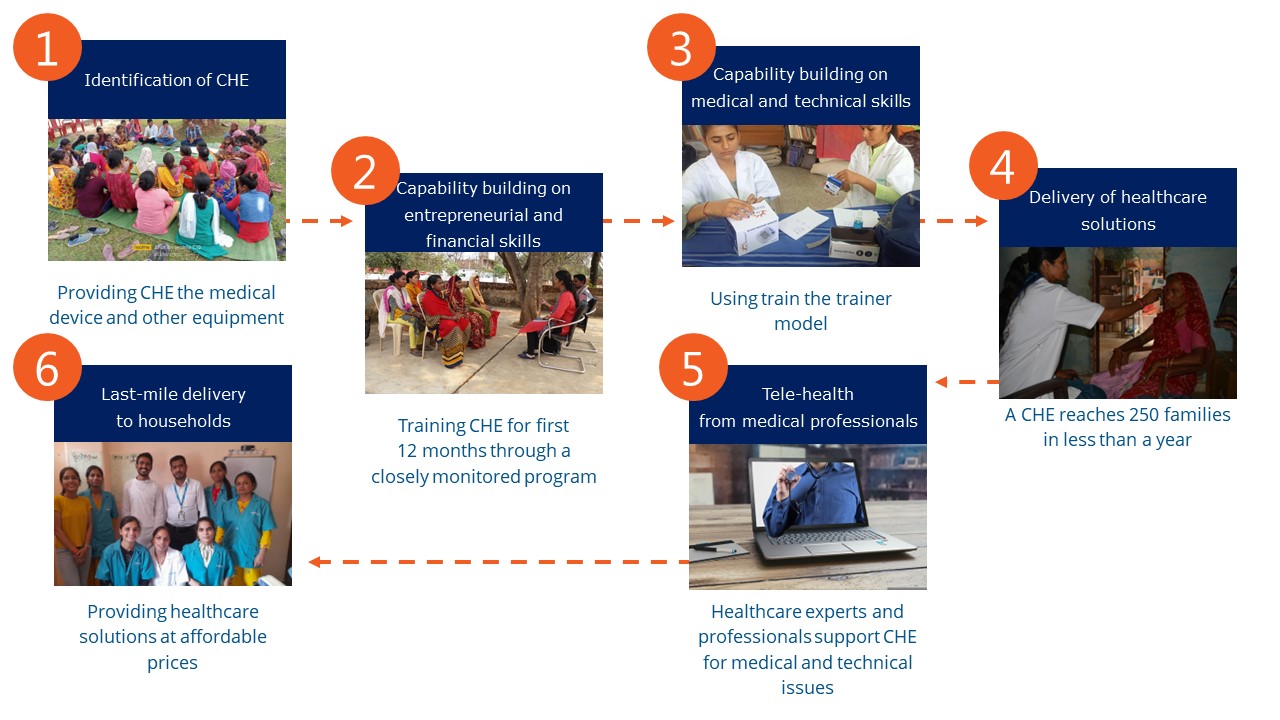
We create dignified place based livelihoods by training, empowering and equipping women to enable reliable, affordable, culturally sensitive, primary healthcare solutions at the doorstep.
CHEs act as trusted, accessible health resource persons, offering doorstep screening for conditions such as anemia, diabetes, and hypertension, delivering basic care, enabling teleconsultations, and facilitating referrals to the public health system. By combining preventive, promotive, and basic curative services, the program bridges critical gaps in access, affordability, and trust, ensuring that communities receive timely and culturally sensitive care close to home. We implement this model across both rural and urban contexts, adapting to local needs and health system realities to ensure relevance and effectiveness.

In addition to primary healthcare delivery, Bahaar is also building focused community health programs that address specific, high-burden conditions such as anemia. These initiatives aim to demonstrate how community-led models can enable early detection, improve treatment adherence, strengthen nutrition linkages, and drive sustained behaviour change. Beyond improving health outcomes, the CHE program creates sustainable livelihood opportunities for women, enabling them to earn an income while serving their communities.
Supported by certified training, a robust digital platform, and strong partnerships with government and healthcare providers, CHEs function as vital connectors within the health ecosystem—strengthening referral pathways, improving care-seeking behavior, and reducing the burden on public health facilities. This integrated approach not only enhances community health resilience but also builds a scalable, women-led model for inclusive and sustainable development.